
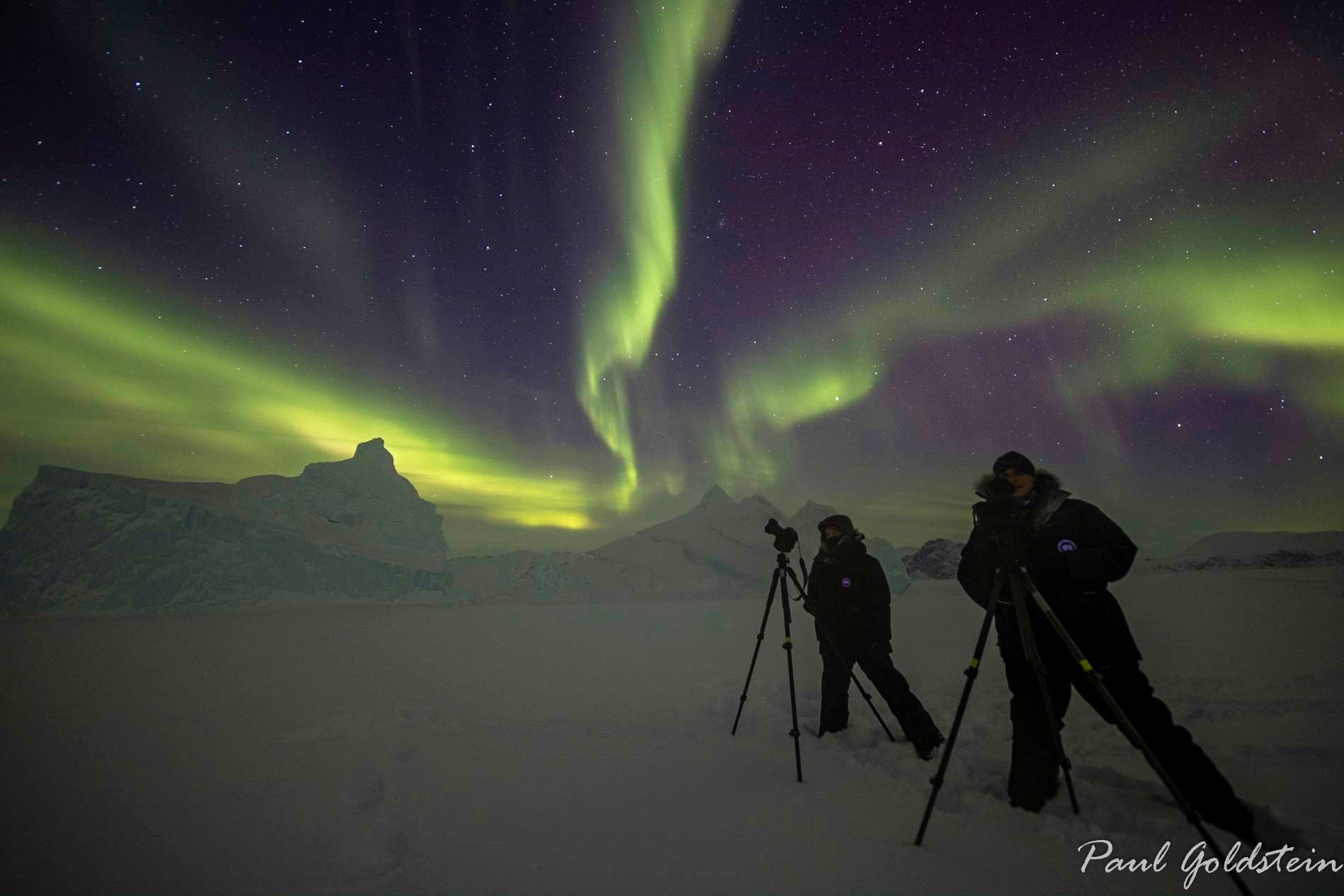
Do you become starry-eyed thinking about the Northern Lights and dream of seeing them? Have you ever wondered what causes the Northern Lights?
Swirling ribbons of green, purple, and pink have captivated travellers for generations, transforming the darkness into one of nature's most extraordinary displays.
Also known as the aurora borealis, the Northern Lights are among the most sought-after natural phenomena in the world. And Canada's North offers some exceptional opportunities to experience them.
From the remote wilderness of Blachford Lodge to the ice-covered landscapes of Nunavut, the aurora can be an unforgettable part of an Arctic adventure.
But what causes the Northern Lights, when is the best time to see them, and where should you go?
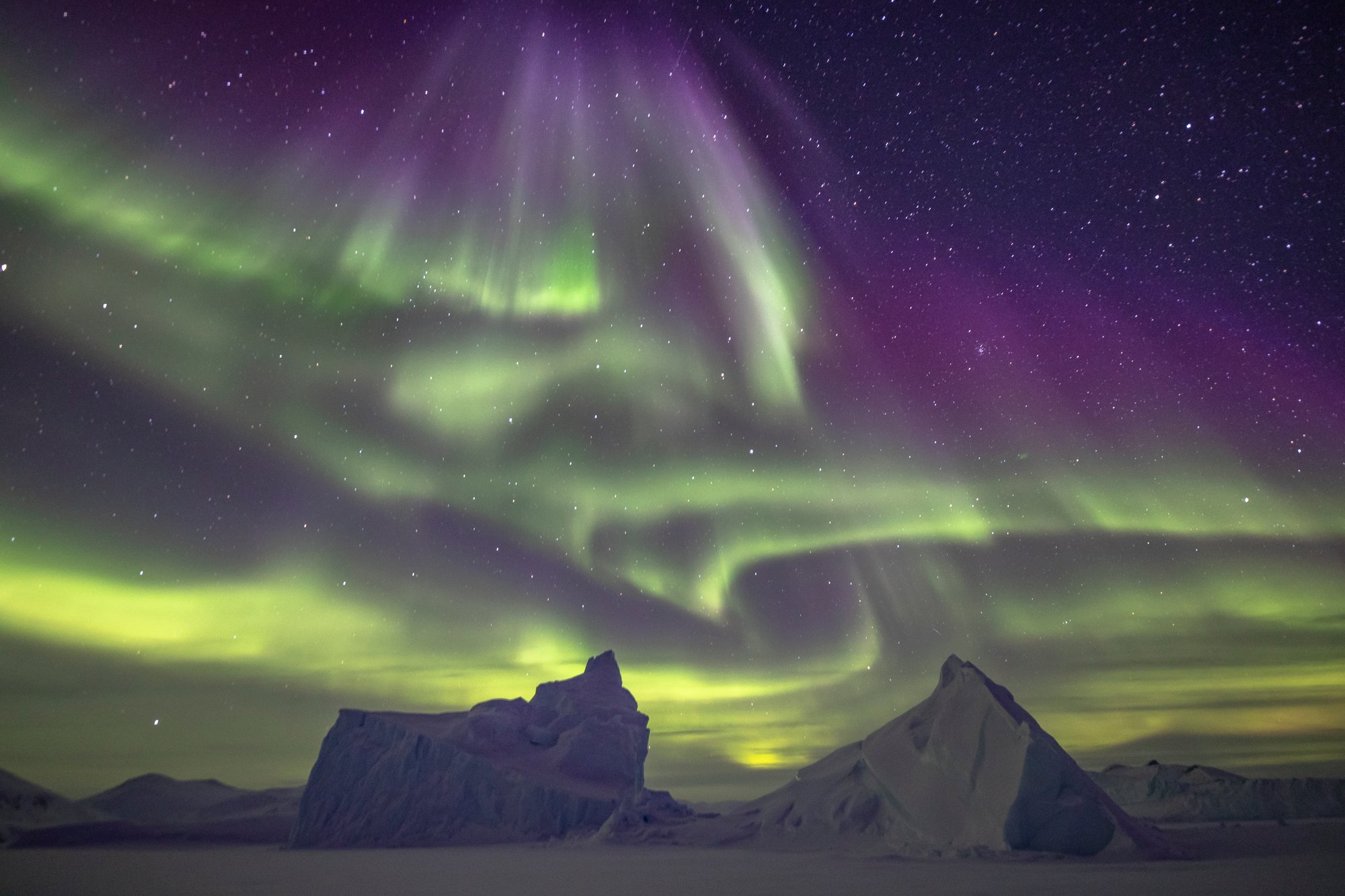
What Are The Northern Lights?
Believe it or not, the Northern Lights begin approximately 150 million kilometres away, at the Sun.
The Sun continuously releases a stream of charged particles known as the solar wind. When these particles reach Earth, they interact with our planet's magnetic field, which guides some of them toward the polar regions.
As energetic particles collide with gases high in Earth's atmosphere, energy is released in the form of light. The result is the colourful, shifting displays we recognize as the aurora borealis.
Although they appear to dance just above the landscape, the Northern Lights typically occur at altitudes of roughly 80 to more than 500 kilometres above Earth's surface.
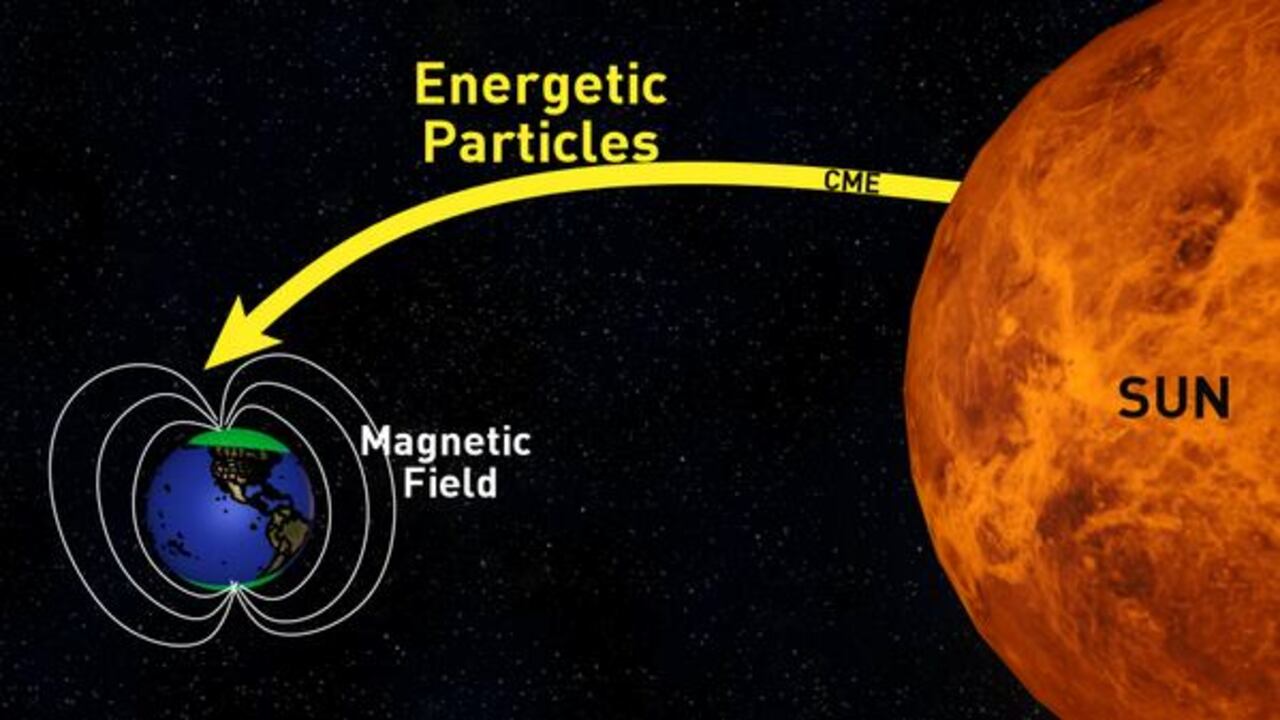
What is Earth’s magnetic field?
The energy formed in Earth’s centre is released from the top and bottom of the planet, like a battery. Since magnetic energy seeks a connection, like electricity jumping space to another wire, the magnetic field forms a circle around the planet.
That energy field creates our atmosphere keeping in certain vital gases like oxygen and nitrogen but creates a barrier to repel other elements.
What makes the colour of the Northern Lights?
The colours of the Northern Lights depend on which atmospheric gases are energized and the altitude at which the interactions occur.
- Green: The most common colour, produced by oxygen at approximately 100 to 150 kilometres above Earth.
- Red: Produced by oxygen at higher altitudes, typically above 200 kilometres.
- Blue and purple: Associated primarily with nitrogen and often visible along the edges of active auroral displays.
- Pink: Often appears when red and blue emissions combine visually, particularly during more energetic displays.
While green is the colour most people associate with the Northern Lights, powerful auroral activity can create an extraordinary range of colours across the night sky.
Why do they seem to dance?
The energy that is produced from the sun comes flowing across space like a wave over water. Those solar winds come in surges and can be stronger at different times.
The way the aurora ribbon seems to dance and twirl above is thanks to the wavy nature of the solar winds.
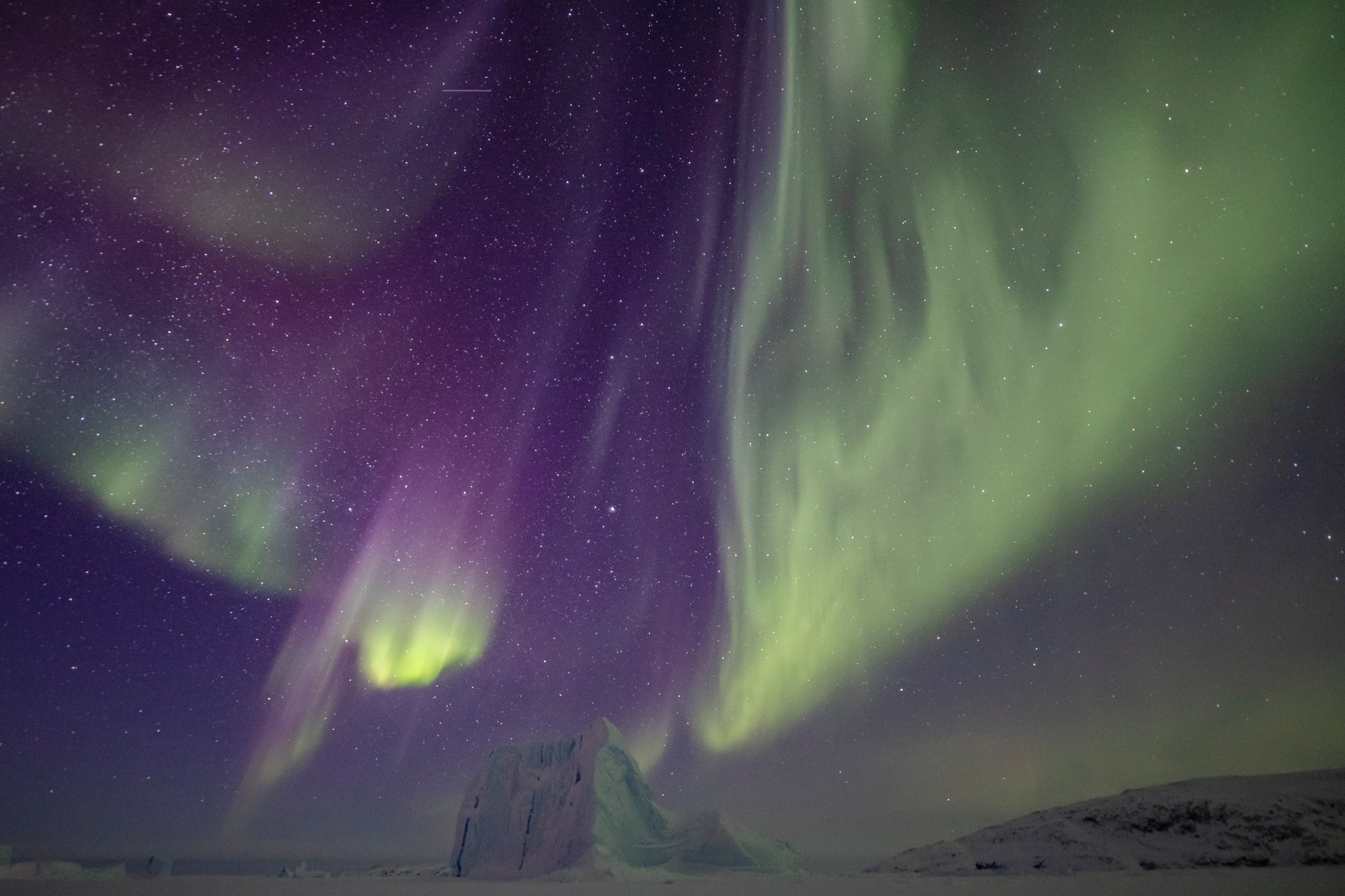
When & Where Can You See Northern Lights
Many people think that above the Arctic Circle would be the best place to see the aurora borealis and only during winter… and they’re close!
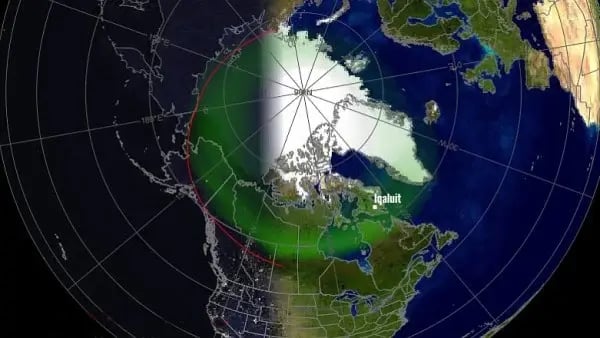
Where can I go to see the Northern Lights?
Canada is home to some of the world's most remarkable Northern Lights viewing destinations.
The Northern Lights appear strongest in the far north because that is where the magnetic field is strongest so the reaction is more visible but we know that the ‘aurora zone’ is just south of the Arctic Circle.
Many of the best locations lie beneath or near the auroral oval, a ring-shaped region around Earth's magnetic pole where auroral activity frequently occurs.
The Northwest Territories and Nunavut offer especially memorable opportunities to witness the aurora, each with its own distinctive landscapes and experiences.
When can I see the Northern Lights?
Although auroral activity occurs throughout the year, the Northern Lights require sufficiently dark skies to be visible.
In northern Canada, the most favourable viewing opportunities generally occur between late August and April, depending on the destination.
Autumn offers darkening skies, relatively mild temperatures, and the possibility of seeing the aurora reflected in open water. Winter brings longer nights and snow-covered landscapes, while early spring combines opportunities for Northern Lights viewing with increasing daylight for daytime adventures.
Clear skies, limited light pollution, and solar activity all influence visibility. No destination or season can guarantee a sighting, but spending multiple nights in a favourable location can improve your chances.
Can you predict the Northern Lights?
Although the aurora is a natural phenomenon that cannot be guaranteed, space weather forecasts can help travellers understand when conditions may be favourable.
Scientists monitor solar activity, the solar wind, and changes in Earth's magnetic field to estimate the likelihood of auroral displays.
The Canadian Space Weather Forecast Centre provides information about geomagnetic activity and aurora forecasts across Canada.
However, even during periods of strong auroral activity, local weather conditions remain important. Cloud cover can obscure the Northern Lights entirely, making clear skies one of the most important factors for a successful viewing experience.
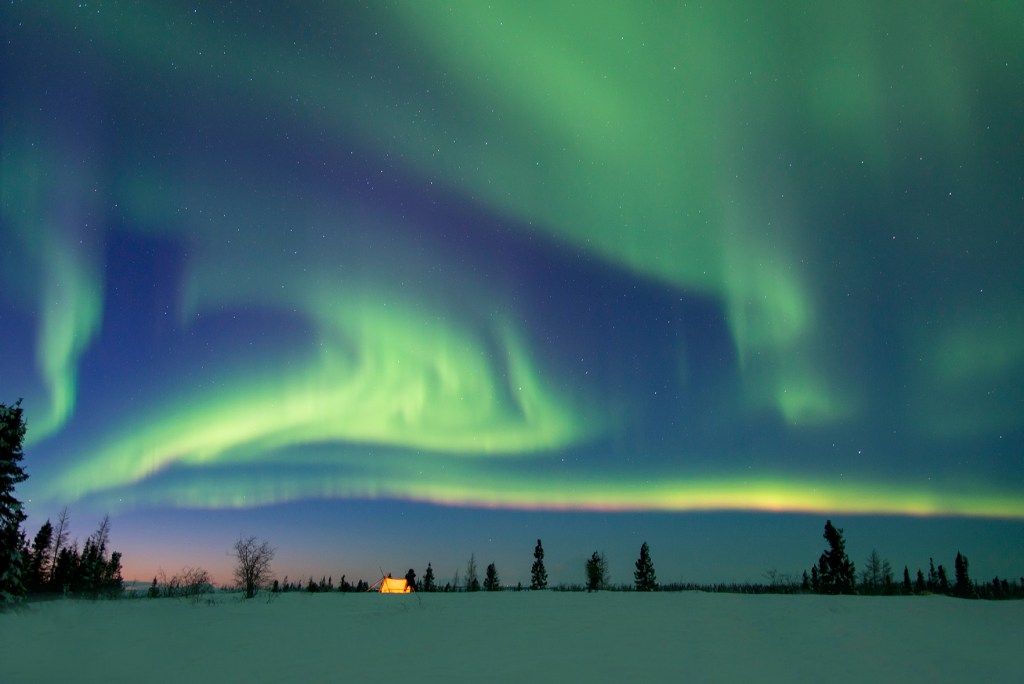
Our Trips with Northern Lights
Have you dreamed of seeing the Northern Lights and want to bring home exceptional photos of this galactic phenomenon? Our trips offer arctic wildlife viewing opportunities, northern outdoor activities, and located in some of the most ideal places for seeing the Northern Lights.
Click on any of our trips for more details:
Polar Bear Mother & Newborn Cub Safari (Mid-Winter)
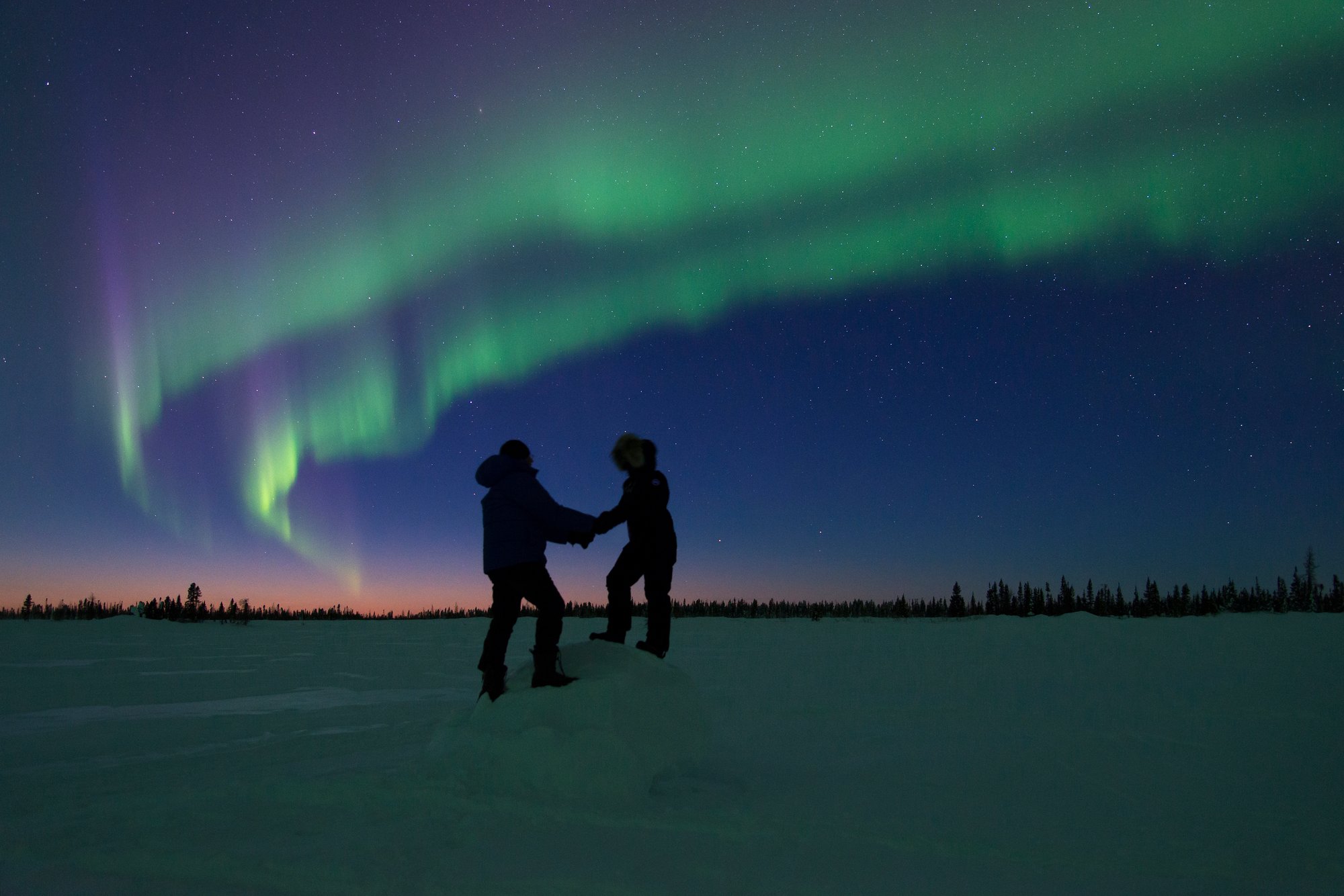
Each winter, the wilderness of Wapusk National Park becomes the setting for one of nature's most remarkable wildlife spectacles.
Arctic Kingdom's Polar Bear Mother & Newborn Cubs Safari takes guests into this renowned polar bear denning region to observe mothers and their young cubs emerging into the winter landscape.
While polar bears are the focus of the journey, the long northern nights can also offer opportunities to see the aurora above the tundra.
The possibility of experiencing both remarkable wildlife and the Northern Lights makes this a particularly special winter adventure.
Spring Polar Bears & Icebergs of Baffin Safari (Early Spring)
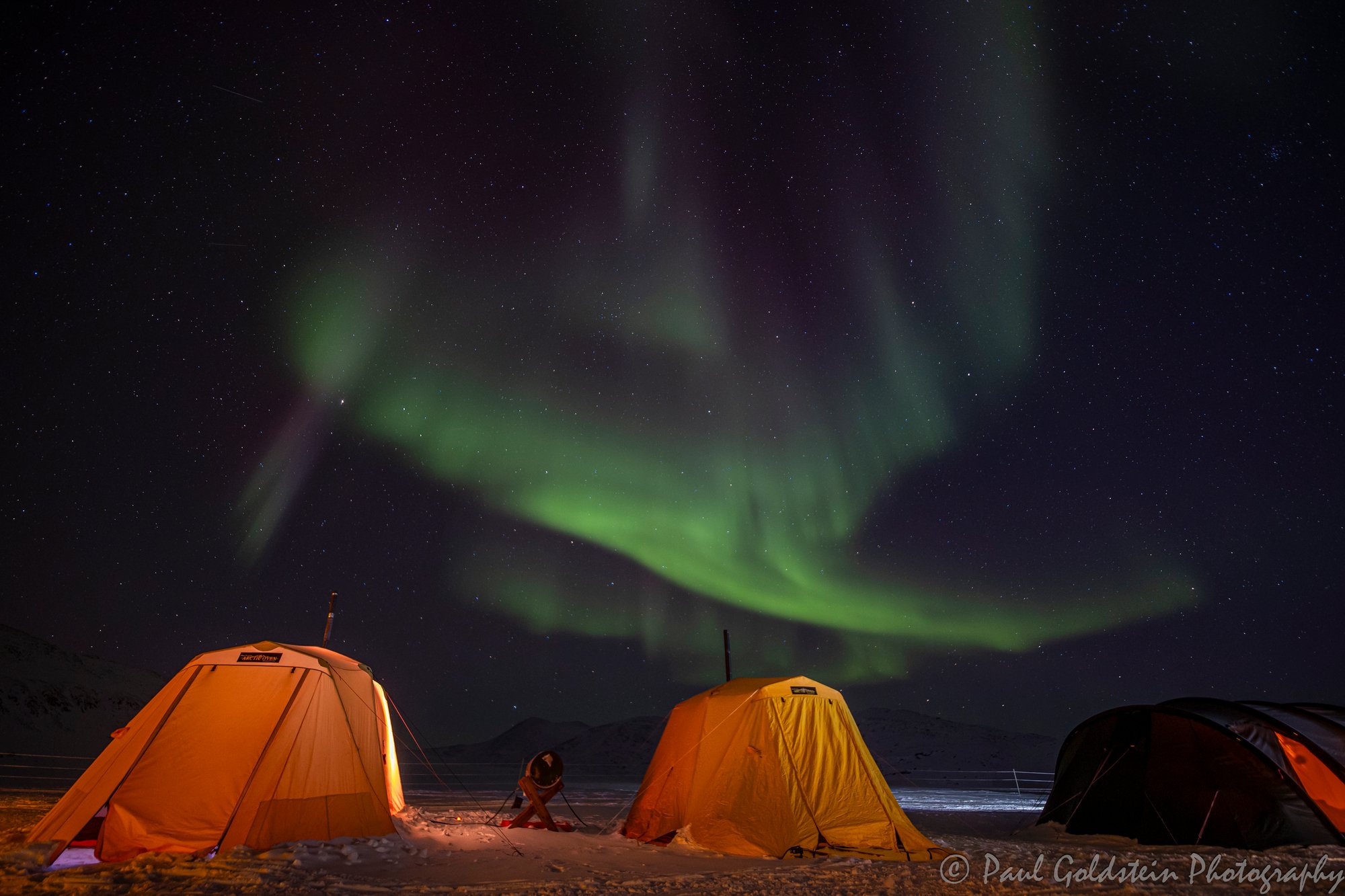
In early spring, Arctic Kingdom's Spring Polar Bears & Icebergs expedition brings guests to the dramatic landscapes surrounding Qikiqtarjuaq, Nunavut.
Here, towering icebergs stand frozen in the sea ice beneath the mountains of Baffin Island, creating an extraordinary setting for Arctic exploration and polar bear photography.
Guests spend their days travelling with expert Inuit guides, searching for wildlife and exploring the frozen coastline.
As evening falls, the Northern Lights may appear above the icebergs and snow-covered mountains, offering an entirely different photographic perspective on this remarkable landscape.
The Great Polar Bear Migration (Autumn)
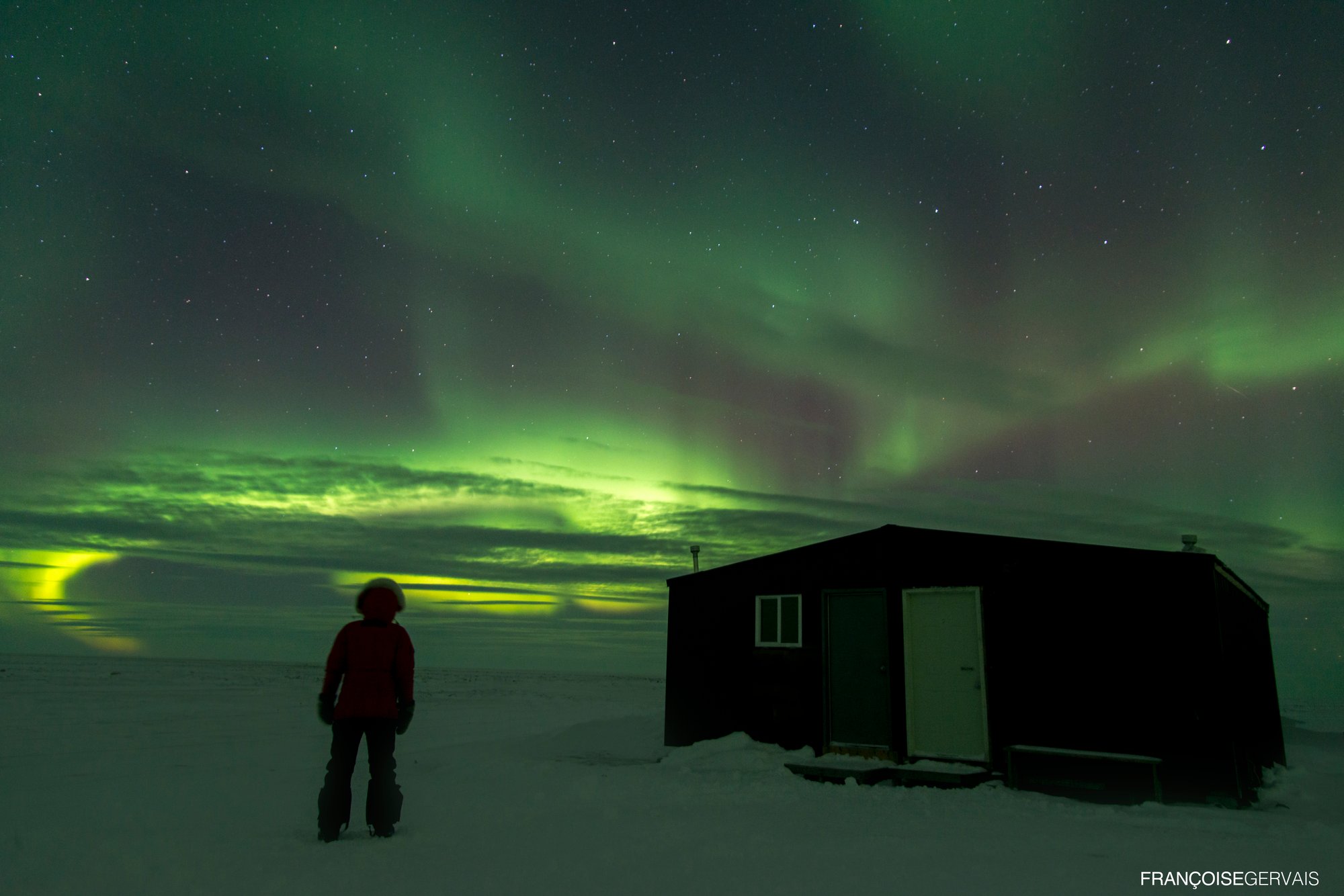
Every autumn, polar bears gather along the western shores of Hudson Bay as they wait for the sea ice to return.
Arctic Kingdom's Great Polar Bear Migration expedition offers an opportunity to observe this remarkable seasonal movement from a remote fly-in wilderness camp.
Days are dedicated to polar bear viewing and photography, while evenings offer a chance to experience the quiet beauty of the northern landscape.
With sufficient darkness and favourable conditions, the Northern Lights may illuminate the sky above camp, adding another unforgettable dimension to the expedition.
Blachford Lodge (August-April)

A bush plane flight from Yellowknife takes you to Blachford Lodge, an off-grid wilderness retreat beneath the auroral oval. Far from city lights, the lodge offers dark skies and open views over Blachford Lake, with opportunities to see the Northern Lights from mid-August through mid-April.
As dark nights return in late summer and autumn, the aurora can reflect in the lake on calm nights. Once the lake freezes and snow covers the trails, guests can spend their days snowshoeing, cross-country skiing or ice fishing before watching for the lights over the ice. By early spring, longer days give you more time to explore outdoors while the sky still darkens enough for aurora viewing.
Watch from the lakeshore or settle into the outdoor hot tub and keep an eye on the sky. If you’d rather turn in, you can request a wake-up call from the lodge’s Aurora Watch team when the lights appear.
Tips for Photographing the Northern Lights
Try these blogs:Are you interested in an in-depth look into everything you’ll need to know to get exceptional photos of the northern lights?
Try a blog from one of our contributors:
Experience The Arctic on an Expedition
Get chances to view elusive Arctic wildlife and experience the majesty of the Arctic on expeditions almost year-round. View all Arctic Expeditions here.
Ready for adventure? Contact our Arctic Travel Advisors to book.
Are you still curious about the many wonders of the Arctic or looking for more interesting content then explore more blogs here!
By: Mat Whitelaw // Updated 2026 by Olivia Farr


